
Tuesday, 11 September 2012
Berserker
Berserkers (or berserks) were Norse warriors who are reported in the Old Norse literature to have fought in a nearly uncontrollable, trance-like fury, a characteristic which later gave rise to the English word berserk. Berserkers are attested to in numerous Old Norse sources. Most historians believe that berserkers worked themselves into a rage before battle, but some think that they might have consumed drugged foods.


Chimera
 /kɨˈmɪərə/ or /kaɪˈmɪərə/; Greek: Χίμαιρα, Khimaira, from χίμαρος, khimaros, "she-goat") was, according to Greek mythology, a monstrous fire-breathing female creature of Lycia in Asia Minor, composed of the parts of three animals: a lion, a serpent and a goat. Usually depicted as a lion, with the head of a goat arising from its back, and a tail that ended in a snakes's head,[1] the Chimera was one of the offspring of Typhon and Echidna and a sibling of such monsters as Cerberus and the Lernaean Hydra. The term chimera has also come to describe any mythical or fictional animal with parts taken from various animals.

Oni
Oni (鬼) are creatures from Japanese folklore, variously translated as demons, devils, ogres or trolls. They are popular characters in Japanese art, literature andtheatre.[1]
Depictions of oni vary widely but usually portray them as hideous, gigantic ogre-like creatures with sharp claws, wild hair, and two long horns growing from their heads.[2] They are humanoid for the most part, but occasionally, they are shown with unnatural features such as odd numbers of eyes or extra fingers and toes.[3] Their skin may be any number of colors, but red and blue are particularly common.

Tengu
Tengu (天狗, "heavenly dogs") are a class of supernatural creatures found in Japanese folklore, art, theater, and literature. They are one of the best known yōkai (monster-spirits) and are sometimes worshipped as Shinto kami (revered spirits or gods). Although they take their name from a dog-like Chinese demon (Tiangou), the tengu were originally thought to take the forms of birds of prey, and they are traditionally depicted with both human and avian characteristics. The earliest tengu were pictured with beaks, but this feature has often been humanized as an unnaturally long nose, which today is widely considered the tengu's defining characteristic in the popular imagination.


Inugami
Inugami In Japanese mythology an inugami ("dog god") resembling, and usually originating from, a dog, (although other similar species are interpreted as being. eg, Wolves, Raccoons, and Weasels.) and most commonly carrying out vengeance or acting as guardians on behalf of their "inugami owner". Inugami are extremely powerful and capable of existing independently, (without master or possession) as well as turning on their "owners" and even possessing humans. Even so, while Inugami can betray their masters, they may also be the loyalest of companions


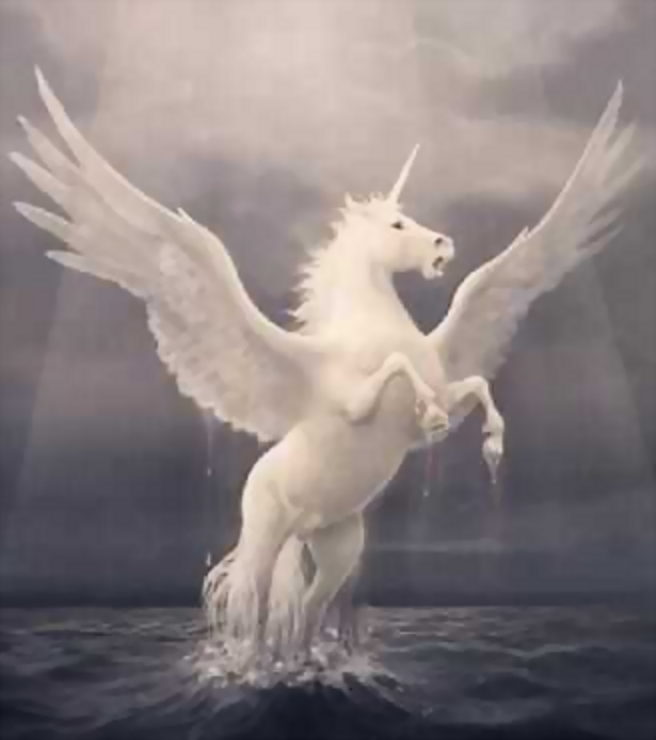
Pegasus
Pegasus (Ancient Greek: Πήγασος, Pégasos, Latin Pegasus) is one of the best known mythological creatures in Greek mythology. He is a winged divine horse, usually depicted as white in colour. He was sired by Poseidon, in his role as horse-god, and foaled by the Gorgon Medusa.[1] He was the brother of Chrysaor, born at a single birthing when his mother was decapitated by Perseus.

Tuesday, 4 September 2012
Kraken
Kraken are legendary sea monsters of giant proportions said to dwell off the coasts of Norway andGreenland.
The legend may actually have originated from sightings of real giant squid that are variously estimated to grow to 13–15 m (40–50 ft) in length, including the tentacles.[2][3] These creatures normally live at great depths, but have been sighted at the surface and have reportedly attacked ships.

Subscribe to:
Posts (Atom)


